Drought
A summer of record-breaking heatwaves has led to widespread droughts with parts of England under Temporary User Bans (TUB) which includes domestic hosepipes. Some Water Authorities are now looking to go further and implement a Non-Essential User Ban (NEUB) which means that mechanical car washing equipment and jet washes could be forced to close. The CWA are actively engaging with DEFRA, the Environment Agency and Water Authorities to try and develop a pragmatic solution which could entail non-compliant hand car washes many of whom ignore employment law, don't pay taxes and pollute the environment, closing first.
Please see below for the latest information:
England has experienced its wettest week for two years after heavy rainfall caused by Storm Austen and Storm Boelo.
An average of 55mm of rain fell across England in the seven days to Oct 27, with as much as 76mm in the North West and 87mm in the South West.
The downpours meant England received 11 per cent more rainfall than the long-term average for October, according to the Environment Agency.
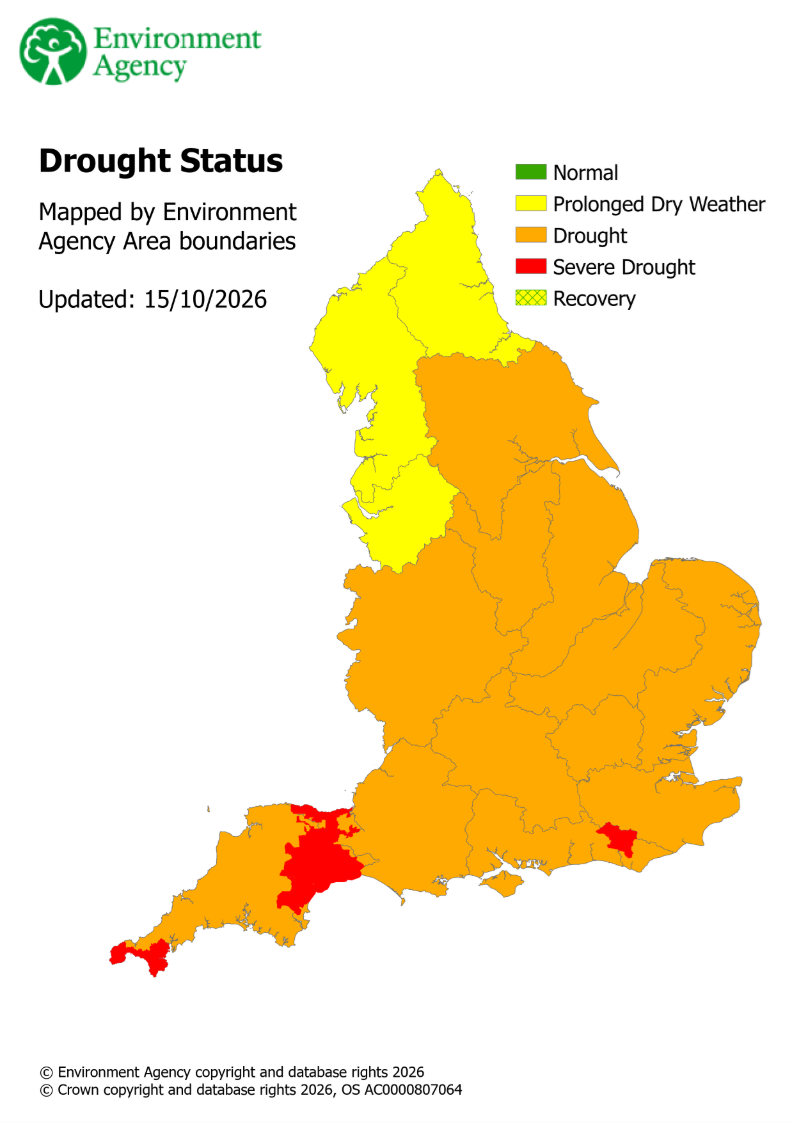
River levels have increased at all but two of the sites the agency monitors, with the Dart classed as “exceptionally high” at Austin’s Bridge, near Buckfastleigh in Devon. However, much of the country remains officially in drought, with a severe drought in place across parts of the South West and Sussex.
Hosepipe bans remain in place in areas worst affected by the storms. The Isle of Wight, where thousands of homes were left without power by Storm Austen, has a Southern Water hosepipe ban in place.
Residents of Cornwall, Sussex and Devon are banned from using a hosepipe as water companies warned of drought conditions.
Last week, South West Water and South East Water, the two companies responsible for these areas, submitted applications for a “non-essential use ban” in their areas.
The restrictions, which have not been used in Britain for 20 years, would cover businesses including public swimming pools, car washes, commercial window cleaners and gardeners. It follows Britain’s hottest summer on record, during which drought was declared in nearly three-quarters of England and Wales.
Source: The Telegraph